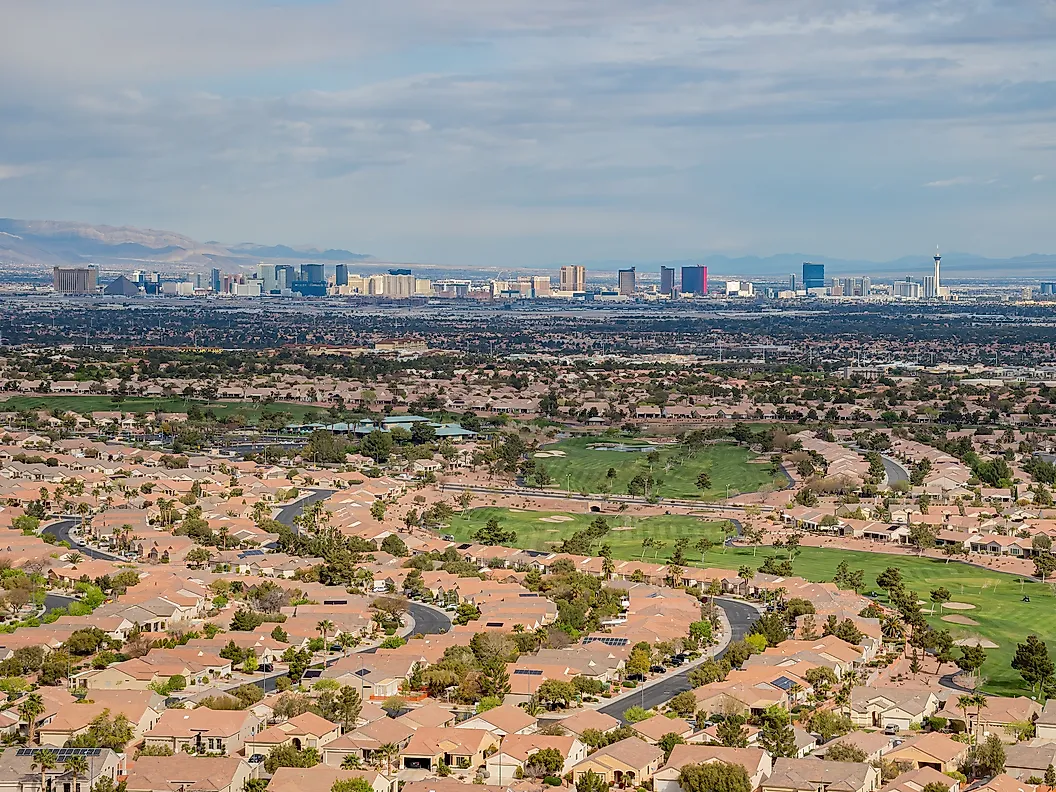
The north edge of the Las Vegas Valley no longer feels like empty desert waiting for a someday plan. Warehouses, water lines, trucking yards, distribution centers, and business parks are pulling the city into a new role. The workforce housing shortage is now part of that growth story because jobs are arriving faster than many working households can find the right place to live near them. For renters, buyers, employers, and small investors, this is not a simple “hot market” headline. It is a local math problem. Wages, rents, commute time, land, and infrastructure all meet on the same street. North Las Vegas has nearly 300,000 residents, more than 104 square miles of land, and a city government that openly markets itself around transportation access, business incentives, logistics, and manufacturing. For anyone tracking regional development signals, the key question is no longer whether the city is growing. It is whether housing can stay close enough to the work.
Industrial Momentum Is Rewriting the North Side Map
North Las Vegas used to be discussed as a lower-cost alternative inside the wider Las Vegas metro. That label is now too thin. The city is becoming a job engine, not a quiet overflow zone. Its economic development pitch is built around land, infrastructure, transport corridors, and a business climate that attracts distribution, logistics, manufacturing, aerospace, and defense firms. That shift matters because North Las Vegas industrial growth does not sit neatly inside one office district. It spreads along roads, near rail plans, around Apex, and into areas where housing has not always kept pace.
Why warehouses change housing demand faster than offices do
A warehouse district can look boring from the road. Big walls. Truck gates. Long roofs. Guard shacks. Yet inside those buildings, shifts start before sunrise, after dinner, and deep into the night. That creates a different housing pattern than a nine-to-five office cluster.
A logistics worker does not want a 50-minute drive after unloading trailers for ten hours. A maintenance tech does not want to cross the whole valley when a child needs pickup from school. A supervisor taking an early shift may choose a smaller rental near Craig Road or Losee Road over a nicer place farther south.
That is the pressure point. Industrial demand creates housing demand at ordinary income levels, not only at executive levels. When local planning misses that, the city can gain jobs while workers lose time.
Apex is not distant anymore in economic terms
Apex Industrial Park was once easy to treat as “out there.” That thinking is fading. North Las Vegas reported more than 7,000 acres and 25 million square feet under development at Apex, including the Kroger Distribution Center and the Garnet Valley/Apex water and wastewater system. The city also says full buildout could mean 73,000 jobs and $7 billion in investment over 20 years.
That does not mean 73,000 workers need homes tomorrow. It means the housing market must price the future before the future fully arrives. Landlords notice. Home sellers notice. Builders notice.
A counterintuitive point matters here: the biggest housing strain may show up before the biggest hiring wave. Developers, contractors, early operations teams, truck drivers, and support firms often arrive ahead of the final job count. The shortage starts during the buildout, not after the ribbon cutting.
Why the Workforce Housing Shortage Is Becoming a Deal Test
A growing city can look healthy and strained at the same time. North Las Vegas has both signals. The city has local employment momentum, but working households still face the same Valley-wide squeeze affecting much of Southern Nevada. Recent housing summit reporting said experts expect about 380,000 to 400,000 more people in the region over the next decade, while Clark County estimates point to a need for 80,000 to 96,000 affordable rental units. That is the backdrop for every employer that wants reliable staff and every renter trying to stay close to work.
The rent problem is also a commute problem
People often talk about rent as a monthly number. That misses half the burden. A cheaper apartment can cost more if it adds gas, vehicle wear, child care gaps, and stress. The U.S. Census Bureau reports a mean travel time to work of 26.7 minutes for North Las Vegas workers age 16 and older, along with a median household income of $79,542 for 2020–2024. Those figures help explain why affordable housing in North Las Vegas cannot be treated as a charity issue. It is part of household survival math.
Think about a two-income household where one person works near Apex and the other works near the Strip. A move that cuts one commute may stretch the other. A family may accept a higher rent if it protects work schedules and school routines.
The non-obvious insight is that “affordable” does not always mean the lowest rent. It means the lowest total strain. That includes distance, reliability, shift timing, and whether a household can live without turning every weekday into a timing contest.
Employers cannot hire from a map
A company may see North Las Vegas and think the labor pool is large because the metro is large. On paper, that sounds fair. In daily life, workers choose jobs through the lens of bus routes, rent renewals, child care hours, and gas prices.
Apex Industrial Park jobs are especially sensitive to that reality because many are tied to physical presence. You cannot unload freight from home. You cannot repair equipment through a laptop. You cannot run a cold-storage shift from a coffee shop.
That gives nearby housing real economic value. Employers with hard-to-fill roles may need to think beyond wages. Housing partnerships, shuttle links, shift design, and training pipelines can matter as much as a signing bonus. A few dollars more per hour may not beat a shorter, safer commute.
Land Supply Is the Hidden Constraint Behind Local Prices
Southern Nevada has wide views, but wide views are not the same as easy land. Much of the region is shaped by federal land, infrastructure costs, grading limits, water systems, and the distance between raw acreage and buildable neighborhoods. Recent reporting from the Las Vegas housing summit said only about 36,000 acres of privately owned, developable land remain in the Valley. That is why local housing supply planning should be read beside job announcements. One without the other gives a false picture.
Desert land is not automatically cheap land
From a distance, open land north of the city can look limitless. Builders know better. A parcel without water, sewer, power, road access, and grading feasibility is not housing supply yet. It is a question with a price tag.
That is why infrastructure news can matter as much as building permits. North Las Vegas celebrated the raising of a 1.25-million-gallon elevated water tank at Apex, a $13.5 million water services investment tied to industrial growth. The housing lesson is plain: growth follows pipes, roads, and power. So do prices.
Here is the twist. More industrial infrastructure can make nearby land more useful for jobs before it makes nearby land useful for homes. If public investment opens the door for warehouses faster than neighborhoods, the employment side wins the first round.
Multifamily gaps hit workers first
Nevada’s housing problem is not only about single-family home prices. The Guinn Center says the state faces a severe affordability crisis tied to supply and demand, rising construction costs, zoning limits, slow permits, federal land ownership, out-of-state buyer pressure, and low wages in some service sectors. It also notes that Clark County has lagged in multifamily construction.
That matters for North Las Vegas because many new industrial households will not buy right away. Some will rent while testing a job. Some will move from another part of the Valley. Some will need two-bedroom or three-bedroom units near schools, not studio apartments near nightlife.
Affordable housing in North Las Vegas will need more than scattered projects. It needs enough rental choices at different income levels so workers are not forced into the same narrow band of units. When that band gets crowded, rents rise even in areas people once called affordable.
Investors Should Read Demand Without Romanticizing It
Investors like simple stories. “Jobs are coming” is one of the simplest. It is also one of the easiest to mishandle. North Las Vegas industrial growth supports real housing demand, but it does not make every property a smart buy. Street quality, school access, commute patterns, repair costs, insurance, water policy, and tenant income all shape returns. A good investor studies the worker’s week, not only the city’s press release.
The best rental is often the least glamorous one
A clean three-bedroom home near daily needs can outperform a flashier unit if it fits the way working families live. Covered parking may matter more than designer counters. A fenced yard may matter more than a lobby. A quick drive to a distribution center may matter more than a view.
That is not a call to buy anything cheap. It is a call to match the asset to the renter. Industrial workers often need reliability: working air conditioning, safe parking, laundry access, storage, and a landlord who fixes things before a small problem becomes missed work.
Apex Industrial Park jobs may increase demand for practical rentals in nearby parts of North Las Vegas, especially where commutes stay manageable. But the rent must still match local pay. Push too high, and turnover eats the gain.
Small policy shifts can move the market
The Apex Area Technical Corrections Act took effect in 2025 and allows North Las Vegas to issue permits for utility services along rights-of-way instead of routing each case through the Bureau of Land Management. City leaders framed it as a way to cut delays for roads, water, power, natural gas, phone, and rail service tied to Apex.
For housing watchers, that type of policy change is easy to miss. It is not a rent chart. It is not a listing photo. Yet it can change the pace of job growth, which then changes housing pressure.
The non-obvious play is patience. The first wave of speculation often chases headlines. The better read comes from permits, completed infrastructure, employer openings, and whether nearby housing supply responds. If jobs arrive and housing lags, rents may strengthen. If too many investors crowd the same zip code, returns can thin fast.
The Next Test Is Whether Growth Feels Livable
Industrial success alone will not decide the future of North Las Vegas. The city also has to feel livable for the people who keep that industrial base running. That means housing, schools, parks, clinics, groceries, buses, and safe roads must grow with jobs. The Valley already knows what happens when workers are priced far from opportunity. They drive longer, change jobs faster, and carry more risk at home. North Las Vegas has a chance to do better because the pressure is visible before the full buildout arrives.
Mixed-use projects show the direction, not the full answer
Clark County’s Lake Mead mixed-use microbusiness park is one small sign of where the region is headed. The project includes 76 housing units, more than 20,000 square feet of retail, office, restaurant, and entrepreneur space, and rents aimed at residents earning 80% or below area median income. It is not enough to solve the wider gap, but it shows the right instinct: housing and work should not be planned as strangers.
North Las Vegas will need versions of that idea at different scales. Some belong near corridors. Some belong near training centers. Some belong near family services.
The catch is that mixed-use development can get expensive fast. If every project becomes polished and high-rent, workers get branding instead of relief. The better model is practical: useful ground-floor services, sensible rents, and locations that cut real travel time.
The city’s advantage is timing
Many places notice housing strain after the damage is set. North Las Vegas can still shape part of the outcome. The city has land strategy, industrial momentum, and public attention on the housing gap. That gives planners, builders, employers, and investors room to act before distance becomes the default solution.
The best near-term moves are not mysterious. Build more rental housing near job corridors. Protect room for family-sized units. Speed review without lowering safety. Tie training programs to employers. Let Southern Nevada real estate research compare rent, wage, and commute data together rather than treating them as separate files.
The counterintuitive truth is that some restraint may help growth. If North Las Vegas chases every industrial win without matching housing capacity, employers may face the same labor friction they were trying to escape. A livable job hub beats a busy one.
Conclusion
North Las Vegas is not waiting for permission to become an industrial force. The roads, warehouses, water investments, and company moves already point in that direction. But the next chapter depends on whether working households can stay close enough to the opportunity they help create. The workforce housing shortage will not be fixed by one apartment project, one employer shuttle, or one zoning vote. It will take steady alignment between jobs, rents, land, and daily life. That is where the city’s real test sits. Investors should watch the gap, but they should respect it too. Employers should treat housing as part of hiring. Local leaders should measure success by whether workers can build a stable life near the industries rising around them. Growth that pushes workers too far away becomes weaker than it looks. Growth that keeps them rooted can become a lasting local advantage.
Frequently Asked Questions
Is North Las Vegas a good place to invest in rental property?
It can be, especially for practical rentals near job corridors and daily services. The best opportunities depend on purchase price, repair costs, tenant income, commute patterns, and nearby supply. Industrial growth supports demand, but it does not protect a weak deal.
Why are industrial jobs affecting housing demand in North Las Vegas?
Many industrial roles require workers to be on-site, often during early, late, or rotating shifts. That makes nearby housing more valuable. A shorter commute can help workers keep stable schedules, reduce transportation costs, and stay longer with employers.
What areas should renters watch near North Las Vegas job growth?
Renters often compare access to I-15, Craig Road, Losee Road, Lamb Boulevard, and neighborhoods with grocery stores, schools, and bus access. The right area depends on shift location, household size, and whether the commute works during peak traffic.
Are Apex Industrial Park jobs likely to increase rents nearby?
They may add pressure over time if hiring grows faster than housing supply. The effect will vary by neighborhood, unit type, and income level. Family-sized rentals and well-kept homes near workable commutes may see stronger demand.
Is affordable housing in North Las Vegas only a renter issue?
No. Buyers feel it too. When rents rise, saving for a down payment gets harder. When home prices rise faster than wages, renters stay renters longer. That keeps more households competing for the same rental supply.
How does land ownership affect housing in the Las Vegas Valley?
Federal land, infrastructure limits, grading costs, and water access can make open desert harder to build on than it looks. A parcel may appear available, but housing needs roads, utilities, permits, and enough services nearby to support residents.
What should employers do if workers cannot find nearby housing?
Employers can review shift times, support transportation options, work with local training centers, discuss housing partnerships, and choose sites with realistic commute access. Pay still matters, but housing distance can decide whether workers accept or keep a job.
Could more apartments solve the North Las Vegas housing gap?
More apartments would help, but the type and location matter. The city needs units that match local wages, family sizes, and commute routes. New supply works best when it is near jobs, transit, schools, and basic services.